
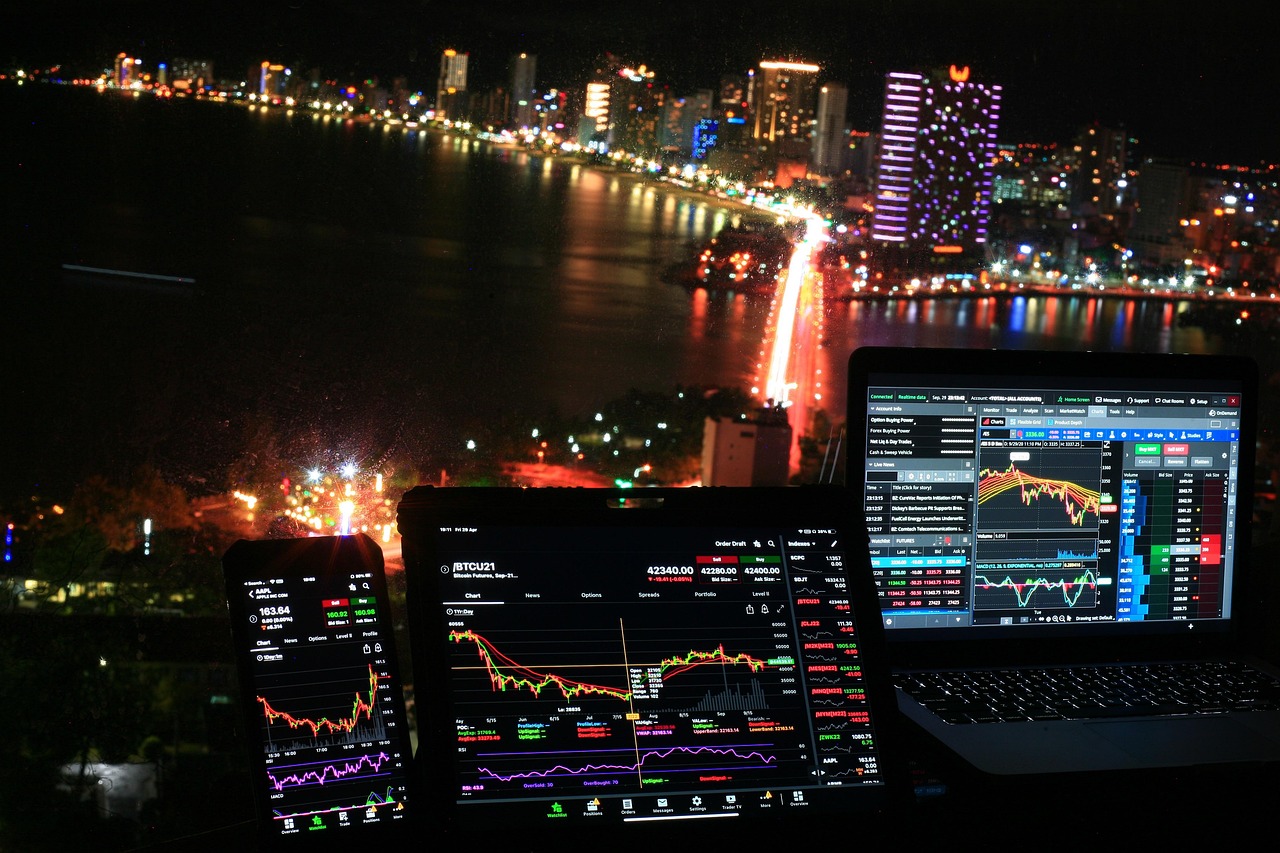
The Forex foreign exchange market has been attracting people dreaming of financial freedom, independence, and work from anywhere in the world for years. For some, it is a fascinating game of numbers, charts and emotions. For others, it is a solid profession in which success depends not on luck, but on knowledge, discipline and analytical skills. Although the web is teeming with “quick ways to make a profit”, a real trader knows that Forex is an environment where learning never ends. If you really want to succeed in it, you need to develop in several key areas: from market analysis, to psychology, to risk management. Below you will find four pillars of knowledge that should be mastered by anyone who dreams of a career as an effective currency trader.
Fundamentals of economics and macroeconomics – the language spoken by the market
It is impossible to understand the foreign exchange market without understanding why exchange rates change. For a trader, concepts such as inflation, interest rates, trade balance or monetary policy cannot be empty slogans – they are tools of analysis. So it’s worth taking the time to learn the basics of economics and monetary policy.
It is a good idea to start with sources such as reports from central banks (e.g. ECB, FED, BoJ), macroeconomic analyses and calendars of economic events. Understanding how central bank decisions affect exchange rates gives a trader an advantage – it allows you not only to react to data, but also to predict market reactions.
Courses or books in the field of applied economics are also helpful. Theoretical knowledge only makes sense when you start to combine it with practice, e.g. by observing how inflation data translates into the strength of the dollar. This is when real learning begins – learning the language spoken by the market.
Technical analysis – the mathematics of emotions on a graph
The second pillar is technical analysis, i.e. the ability to read the behavior of a crowd of investors from price charts. Although some consider it “chart divination”, it is an indispensable decision-making tool for practicing traders.
The basis is to learn about price patterns, technical indicators (RSI, MACD, moving averages), and trends and support and resistance levels. But the real value of technical analysis lies not in the tools themselves, but in understanding the context. You need to learn to think probabilistically – no signal gives certainty, but increases the probability of success.
It is also worth learning how to keep a trader’s diary – write down your trades, thoughts and emotions. Analyzing your own decisions often brings more learning than a thousand charts. In this way, technical precision is combined with psychological self-awareness.
Risk management – the art of survival
Many novice traders focus on how to make a profit, forgetting how not to lose. Meanwhile, risk management is the most important lesson you can learn from the Forex market.
Every trader should learn the rules of setting the size of positions, setting stop loss and take profit levels, and estimating the so-called risk/reward ratio. It is also crucial to understand the concept of diversification – not only between currency pairs, but also between strategies and timeframes.
It is also a good practice to simulate different scenarios – e.g. what will happen if the market goes in the opposite direction. This builds a habit of defensive thinking that protects your capital. In the long run, it is not the number of profitable trades that determines success, but the ability to stay in the game when others have long since left the floor.
The psychology of trading – the most difficult opponent sits in the head
It is not without reason that it is said that Forex is 80% psychology and only 20% analysis. Even the best strategy means nothing if a trader cannot control his emotions. Fear, greed, overconfidence – these are the enemies that can destroy the most promising bill.
That’s why it’s worth learning self-discipline, patience and emotional control. Techniques in the field of cognitive psychology and mental training help here: meditation, taking emotional notes, working with goals and routines.
A good trader is someone who can accept losses as part of the game and be objective about their own results. It often takes years to learn this attitude – but it is what separates amateurs from professionals.
To become an effective forex trader, it is not enough to know one strategy or have a random talent for numbers. You have to constantly learn, observe, analyze and draw conclusions – from the market and from yourself. Economic knowledge, the ability to read charts, risk and emotional control are the four pillars on which success is built.
Forex does not forgive lack of preparation, but it generously rewards those who take learning seriously. If you approach it as a profession rather than a gamble, it will become a school of logic, discipline and self-development for you – and maybe even a ticket to financial independence.